Why Developers Are Choosing Open Source
How open-source development drives collaboration, learning, and career growth while building industry standards.
Why Developers Are Choosing Open Source
Software development is shifting. Proprietary code once dominated. Today, open-source is the default. From startups to tech giants, organizations are publishing work publicly and contributing to shared codebases. This shift isn’t altruistic—it’s strategic.
🔍 The Collaboration Advantage
Open-source multiplies your team. When you publish a repository, you invite global collaboration. Someone in Tokyo fixes a bug while you sleep. Someone in Berlin proposes improvements by morning.
Linus’s Law in Action
“Given enough eyeballs, all bugs are shallow.”
In closed environments, your team size is fixed. In open-source, the community becomes your QA, your code reviewers, and your feature designers.
Practical example: A welcoming CONTRIBUTING.md is the difference between a dead repository and a thriving community. Provide clear contribution guidelines, and people will contribute.
# Contributing

1. Fork the repository
2. Clone to your machine
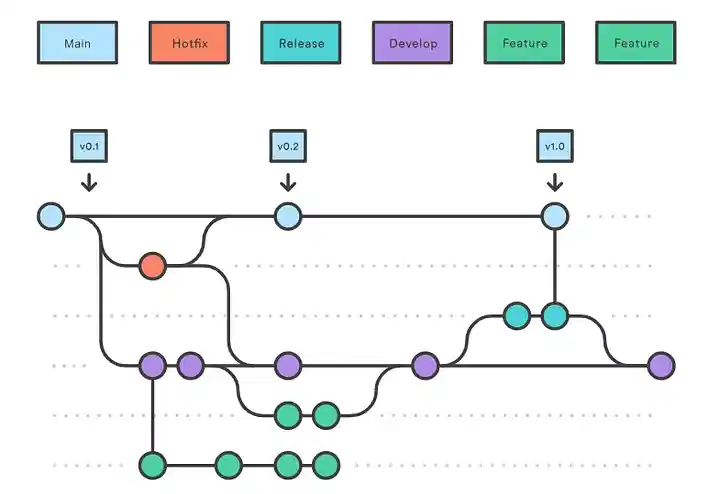
3. Create a feature branch: `git checkout -b feature/my-feature`
4. Commit: `git commit -m "Add feature"`
5. Push: `git push origin feature/my-feature`
6. Submit a Pull Request

Make sure to merge the latest upstream before submitting!
🚀 Faster Innovation Through Feedback
Open-source projects iterate faster than proprietary software. Why? Immediate feedback from real users.
When you release publicly, you see exactly how people use your tool—often in ways you didn’t anticipate. This feedback loop accelerates learning and forces better design decisions.
Real-world pattern: Successful frameworks like Next.js and LangChain didn’t wait for quarterly releases. They shipped weekly, broke things, fixed them, and merged PRs constantly. This velocity is only possible with open-source infrastructure.
📚 Learning at Scale
Open-source is the world’s largest learning library. Want to understand database design? Read PostgreSQL source code. Want to learn parsing? Read compiler source code.
This self-education path is irreplaceable. Reading well-written code teaches you patterns no tutorial can convey.
Pro tip: Don’t just install packages. Occasionally open node_modules and read production code. You’ll learn more in one hour of reading seasoned open-source than ten hours of tutorials.
🤖 AI Revolution is Open
In 2026, AI innovation happens in the open. Models like Llama, Mistral, and others are open-source. Frameworks like LangChain and Ollama are public. The barrier to entry for building advanced AI applications is effectively zero.
This democratization means you’re not dependent on proprietary APIs. You own your data, your models, your infrastructure.
💼 Your Permanent Portfolio
A resume claims competence. A GitHub profile proves it.
When evaluating engineers, I look at open-source contributions. They reveal:
- Code quality: Do they write clean, maintainable code?
- Communication: How do they handle code reviews?
- Passion: Do they code because they enjoy solving problems?
This portfolio compounds over time. Ten years of open-source work is worth far more than a resume.
🔐 Trust Through Transparency
Users increasingly distrust “black box” software, especially with sensitive data. Open-source is the fastest way to build trust.
Mastodon didn’t succeed because it’s a Twitter alternative. It succeeded because it’s transparent. Anyone can audit the code and verify privacy claims. In a world of data breaches, “verified by open-source” is a powerful guarantee.
💡 Key Takeaways
- Collaboration scales: Public repositories tap into global expertise you couldn’t hire
- Feedback loops tighten: Real-world usage reveals design flaws faster
- Learning accelerates: Reading production code teaches patterns tutorials can’t
- Career compounds: Open-source contributions build irreplaceable reputation
- Trust is verifiable: Transparency beats marketing claims
- Innovation multiplies: Distributed development cycles outpace internal teams
🚀 Getting Started
Start small. Build a tool you need, publish it, document it well, and invite contributions. You don’t need a large project to participate in open-source—even bug fixes to established projects count.
The returns—both personal and professional—are worth the effort.
📚 Resources
- GitHub Guides
- Open Source Initiative
- First Timers Only - Find beginner-friendly open-source projects
- Good First Issues - Curated beginner-friendly issues