I Trained My First AI Model
Built and published ASO-Strategist, a fine-tuned language model for App Store Optimization using LoRA on Apple's MLX framework.
I Trained My First AI Model
I built and published ASO-Strategist, a fine-tuned language model for App Store Optimization using LoRA on Apple’s MLX framework. Trained on 1,000 curated examples, it’s available on Hugging Face, Ollama, Kaggle, and Weights & Biases. This post covers the data pipeline, training decisions, and lessons from publishing across four platforms.
🔍 The Problem: Generic Models for Specialized Work
General-purpose LLMs produce generic ASO advice because they lack domain-specific training data. Most don’t understand app categories, keyword competition, or conversion psychology. App Store Optimization requires understanding user behavior, market trends, and creative strategy—all things that demand specialized models.
🛠️ Approach: Data, Training, Distribution
Phase 1: Data Pipeline (2 weeks)
The breakthrough insight: focused, high-quality data beats massive generic datasets.
I created 1,000 carefully curated examples, each containing:
- Real app descriptions
- Target keywords for different categories
- Optimized 30-character subtitles
- Visibility scores (1-100 rating)
This took longer than writing code, but the quality of training data determines model quality.
Phase 2: Training Stack (1 week)
I had to learn three new tools:
- MLX Framework: Apple’s ML framework optimized for Silicon Macs. Significantly faster than PyTorch for fine-tuning on M1/M2/M3 chips.
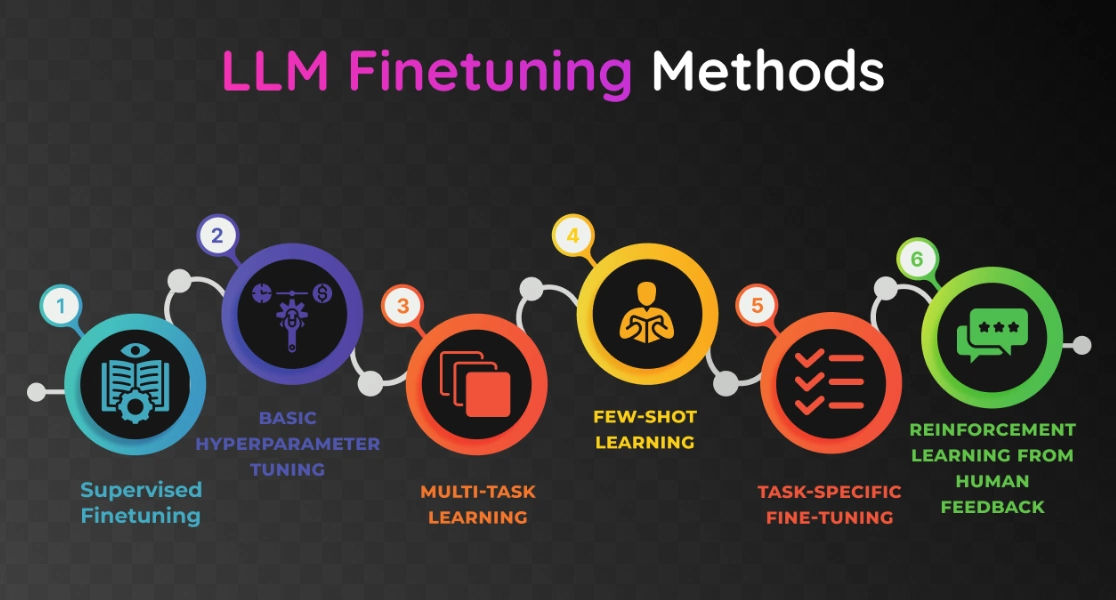
- LoRA Fine-tuning: Low-Rank Adaptation. Instead of retraining the entire model, LoRA adds small adapter layers. Dramatically reduces compute requirements while maintaining quality.
- Model Quantization: Converts 32-bit weights to 4-bit or 8-bit. Reduces model size by 75% with minimal accuracy loss.
Phase 3: Build and Validate
The training process revealed specific challenges:
- Data Quality: Each example had to be realistic and internally consistent. Bad examples teach the model bad patterns.
- Training Stability: Hyperparameter tuning—learning rate, batch size, epochs—to prevent overfitting or divergence.
- Output Format: The model needed to produce consistent JSON output with keywords, subtitle, and reasoning. I used structured prompts and validation in post-processing.
- Performance: Validation loss dropped to 0.320 after convergence, indicating the model learned meaningful patterns.
📊 Results: Publishing and Impact
I distributed the model across four platforms to reach different audiences:
Hugging Face
The primary model hub. Includes comprehensive documentation, training metrics, and inference examples.
Ollama
For developers who want one-command local setup:
ollama pull fahidnasir/ASO-Strategist
ollama run fahidnasir/ASO-Strategist
Kaggle
Data scientists can experiment with the model directly in notebooks.
Weights & Biases
ML engineers can inspect training metrics, experiments, and model performance.
Model Capabilities
ASO-Strategist takes any app description and outputs:
- Target Keywords: 5-8 high-value search terms ranked by competition and relevance
- Optimized Subtitle: A compelling 30-character subtitle
- Search Visibility Score: 1-100 rating based on keyword potential
- Strategic Reasoning: Explanation of keyword choices for that app category
Future Versions
I’m planning improvements based on user feedback:
- 8K context window for longer app descriptions
- Multilingual support for global ASO strategies
- Real-time App Store data integration for trending keywords
- Category-specific optimization for different app types
💡 Key Takeaways
- Data quality trumps quantity: 1,000 hand-curated examples outperformed generic fine-tuning datasets. Spend time on data curation.
- Specialized models solve real problems: A 7B LoRA adapter trained on domain data outperforms a 70B generic model on niche tasks.
- LoRA is a game-changer: Fine-tuning specialized models is now accessible on consumer hardware. No need for massive compute clusters.
- Distribution matters as much as quality: Publishing to four platforms reaches different communities and use cases. Document well for each audience.
- Iteration beats perfection: Ship early, collect feedback, iterate. Version 2.0 improvements came from actual user usage, not speculation.